Low emissions farming: technologies shaping the future

Speaker: Dr Sinead Leahy, Principal Scientist at the Ag Emissions Centre

Date: Monday 6 July

Time: 6pm

Venue: Lecture Theatre 1, EIT Taradale

Admission: Gold coin donation

Agriculture sits at the centre of one of the defining challenges of our time: producing nutritious food while responding to climate change. As pressure grows to reduce greenhouse gas emissions from livestock systems, new technologies are rapidly emerging that could reshape the future of farming in New Zealand and beyond.

In this upcoming lecture, Dr Sinead Leahy, Principal Scientist at the Ag Emissions Centre, will explore the science behind low-emissions farming and the technologies being developed to reduce methane and nitrous oxide emissions from ruminant livestock systems. Drawing on both international and New Zealand research programmes, the talk will examine approaches including vaccines, inhibitors, selective breeding, and microbial technologies, as well as the opportunities and challenges of applying these solutions in pasture-based farming systems.

Dr Leahy is widely recognised for her leadership in agricultural greenhouse gas mitigation research. She has over 20 years of experience in agricultural science and climate change, and currently serves in several major international science leadership roles, including as Co-Chair of the Livestock Research Group of the Global Research Alliance on Agricultural Greenhouse Gases and as a lead author for the upcoming IPCC AR7 Assessment Report.

This promises to be a timely and thought-provoking evening exploring how science and innovation may help shape more sustainable and productive farming systems for the future.

Our Mysterious Brain: The Making and Breaking of Memories

Professor Cliff Abraham, FRSNZ, of Ōtākou Whakaihu Waka – the University of Otago, was awarded the Rutherford Medal in 2025
Date: Tuesday 9 June 2026
Time: 6.00pm
Venue: Lecture Theatre 1, EIT Taradale

Free entry and please book a ticket here

Confocal microscopy image showing newly born nerve cells (in green) in a memory storage region of an adult animal’s brain.

How does our brain remember – or forget? What happens to the nerve cells in our brain to cause this? Emeritus Distinguished Professor Cliff Abraham FRSNZ will speak about our mysterious brains, and ideas for new treatments emerging from the discoveries made by his research team.

How the brain stores memories has long been mysterious. This “fascinating mystery” has inspired Prof Abraham’s research for decades: “The brain is such a complex machine, but it’s just made of cells. How do they perform the operations that lead to something as important as storing information?”

Intensive research over decades has revealed the mechanisms that change connections between nerve cells in the brain and allow memories to be stored. These mechanisms are affected by a variety of internal and external signals, from genetics to environmental stressors. Importantly, this knowledge helps explain memory decline in neurological disorders, leading to revolutionary ideas for new treatments.

The Rutherford Medal is the highest honour awarded by the Royal Society Te Aparangi in Aotearoa New Zealand. It recognises pre-eminent research, scholarship, or innovation.

Emeritus Distinguished Professor Wickliffe (Cliff) Abraham FRSNZ, of Ōtākou Whakaihu Waka – the University of Otago, was awarded the Rutherford Medal in 2025 for breakthroughs in understanding of the neural mechanisms of memory and for providing inspirational leadership for neuroscience in Aotearoa New Zealand.  
 
Prof Abraham established the Brain Health Research Centre at the University and most recently co-led the national Aotearoa Brain Project – Kaupapa Roro o Aotearoa. He is passionate about translating his fundamental research into treatments for neurological disease, as well as mentoring and inspiring the next generation of neuroscientists. 

Thursday, 11 May: 2023 Gibbons Online Lecture – AI and the New Creative Revolution

www.eventbrite.co.nz

The 2023 Gibbons Lectures series is intended to describe ongoing research in Computer Science to a wider public, organized by Faculty of Science, University of Auckland.

Tim Gibson, Stolen Glances Studio

Thursday 11 May, 6:30pm

Venue: Lib B15 Lecture Theatre General Library Basement, (109-B15) The University of Auckland 5 Alfred Street, Auckland CBD, register your place here.

This lecture will be available to livestream here.

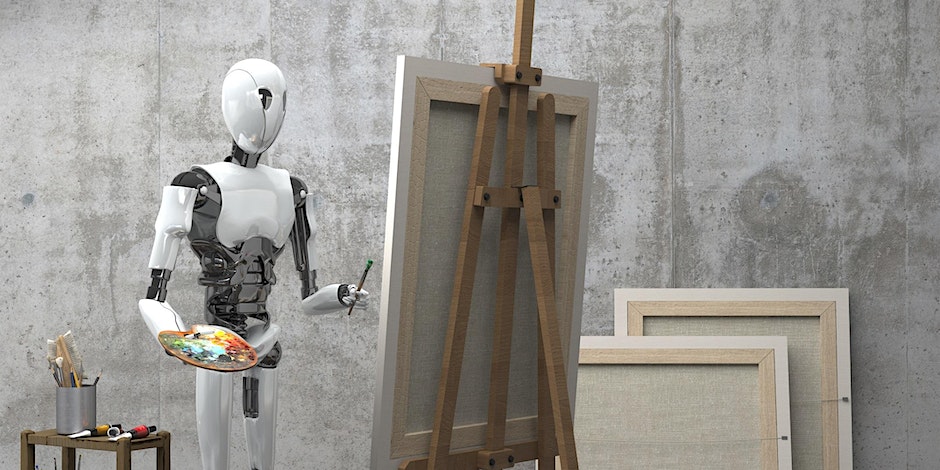
Generative Artificial Intelligence like ChatGPT and its visual equivalents Dall-E, Midjourney and Stable Diffusion have shaken up the creative workforce, often producing industry level copywriting, editing, illustration and design at a fraction of the time and cost of a human worker. Their capabilities have set off a technological arm’s race at the world’s largest tech companies while simultaneously building a user base of enthusiasts faster than the most popular social media platforms.

What can Generative AI be used for, how powerful is it really, how could it be used ethically, and what impact will it have on our creative industries and the people who work for and engage with them?

What could a world look like where creativity is ‘free’? 

In this talk, Tim will showcase some of the current technologies’ capabilities, the hot takes and debates from within the creative industries and attempt to predict what is next for creative Generative Artificial Intelligence.

Tim Gibson is a Creative Director, Animator and Illustrator who has worked for companies big and small across film, television, comics, branding and packaging design. His work has appeared for Garage Project, Weta Workshop, Le Monde Diplomatique, Penguin Random-House, Te Papa Tongarewa and more.